Four-Nation CONCACAF Bid Secures 2031 Women’s World Cup as FIFA Expands to 48 Teams…
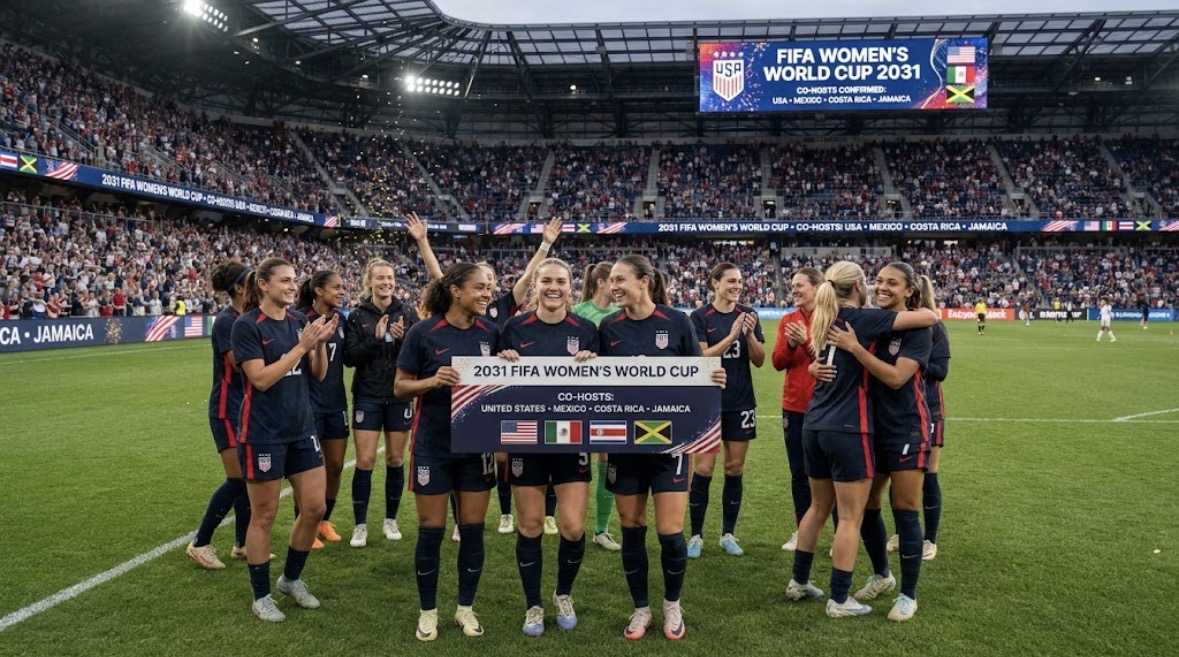
FIFA officially ratified a four-nation regional bid led by the United States—alongside Mexico, Costa Rica, and Jamaica—to host the 2031 FIFA Women’s World Cup. Approved by acclamation during an online meeting of FIFA’s 211 member federations, the unchallenged “For Now, For Next” project marks a landmark shift for women’s football. Not only will the tournament return to American soil for a third time, but it will also debut an expanded 48-team format spanning 104 matches, bringing structural parity with the men’s game.
A Historic Expansion Across CONCACAF

For decades, the FIFA Women’s World Cup grew steadily from its inaugural 12-team edition in China in 1991 to 16 teams, 24 teams, and the 32-team format used in Australia and New Zealand in 2023 and set for Brazil in 2027. By jumping straight to 48 participating nations in 2031, FIFA is accelerating global representation and commercial scale in a single cycle. FIFA President Gianni Infantino highlighted the rapid growth of the women’s game and pledged to reinvest commercial proceeds back into women’s soccer.
Unlike the United States’ previous solo hosting stints in 1999 and 2003—when China was forced to relinquish hosting duties due to the SARS outbreak—the 2031 edition spreads matches across North America, Central America, and the Caribbean. The CONCACAF bid book outlines potential venues across 20 cities:
Bullet 14 cities in the United States
Bullet Four cities in Mexico (including Guadalajara, Mexico City, Monterrey, and Torreón)
Bullet San José in Costa Rica
Bullet Kingston in Jamaica
While the bid book identified an initial pool of 20 candidate stadiums, final host city selections will be confirmed as tournament preparations advance. Leveraging world-class stadiums already battle-tested by major international tournaments—including the 2026 men’s World Cup co-hosted by the United States, Mexico, and Canada—gives organizers massive infrastructure advantages alongside vibrant football cultures in Central America and the Caribbean.