Tragedy in Bayelsa: Boat Capsize Claims Over 23 Lives, Igniting Urgent Calls for Waterway Safety Reforms…
YENAGOA, Nigeria — A devastating maritime disaster in Bayelsa State has plunged southern Nigeria into mourning and reignited a fierce national debate over the perennial neglect of inland waterway safety. Over the weekend, an overcrowded passenger boat transporting mourners to a funeral capsized along the riverine routes of Southern Ijaw Local Government Area, resulting in at least 23 confirmed fatalities, with several passengers still unaccounted for. YouTube
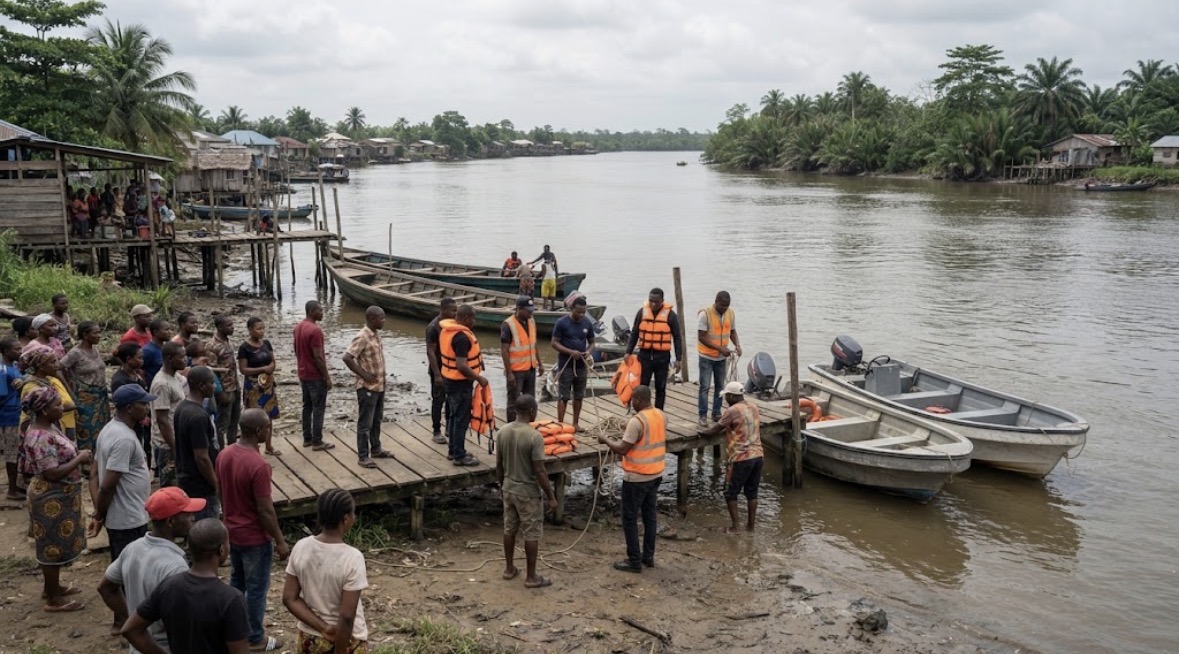
The tragedy, which occurred on Friday, November 20, 2026, involved a commercial wooden boat traveling from Ayama to Ukubie. According to local rescue volunteers and maritime authorities, the vessel encountered sudden mechanical failure before being overcome by strong currents, overturning in deep waters within minutes. As the community reels from the loss of entire families traveling together to pay their final respects, the incident has exposed severe, familiar gaps in the country’s maritime transit regulations.
The Fateful Voyage: What Happened in Southern Ijaw?
The ill-fated vessel was ferrying attendees to a community funeral—a common social gathering in the Niger Delta where rivers serve as the primary, and often only, transport corridors connecting scattered coastal villages. Witnesses and survivors recounted that the boat was heavily overloaded with both passengers and cargo, far exceeding its safe carrying capacity. Al Jazeera +1
Preliminary reports from the Bayelsa State Police Command and community leaders confirmed that the boat driver fled the scene shortly after the vessel overturned, while the manager of the docking facility was taken into custody for questioning. Emergency rescue efforts, predominantly mobilized by local local divers and fishermen before state emergency teams arrived, managed to rescue 24 survivors. By Sunday, search teams had recovered 23 bodies, with rescue workers fearing that the death toll could climb as recovery operations continue downriver.
High-Level Backlash: Probes Ordered and Presidential Mourning
The sheer scale of the tragedy quickly drew national attention, prompting immediate responses from state and federal leadership. Bayelsa State Governor Douye Diri traveled to the affected area, ordering an exhaustive investigation into the disaster. Visibly shaken during an assessment briefing, Governor Diri expressed deep sorrow and directly blamed negligence and a disregard for safety regulations.
“It is unacceptable that we continue to lose precious lives in this manner,” Governor Diri stated, noting with frustration that the boat carried no passenger manifest and that almost none of the victims were wearing life jackets. “Operators who ignore basic safety protocols and risk the lives of citizens for financial gain will face the full weight of the law.”
In Abuja, President Bola Ahmed Tinubu extended condolences to the families of the victims and the government of Bayelsa State. In a statement released through the State House, President Tinubu mourned the tragic loss, urging maritime regulatory bodies—specifically the National Inland Waterways Authority (NIWA)—to dramatically intensify enforcement of travel regulations across all waterways. In deference to the tragedy, the President scaled back planned festivities at political events in the South-West over the weekend.
A Recurring Nightmare on Nigeria’s Waterways
For many Nigerians, the Bayelsa tragedy is a heartbreakingly familiar story. In Nigeria’s riverine regions, particularly across the Niger Delta, the Niger-Benue confluence, and northwest states like Sokoto and Kebbi, boat capsizes have become a tragic staple of rural transit. Just months earlier, in August 2026, over 50 people drowned in Sokoto State when an overloaded vessel capsized, while earlier in the year, 26 lives were lost in Jigawa. Columbus Ledger-Enqu…
Maritime safety experts point to a trifecta of systemic failures: overloading, nocturnal travel on unlit rivers, mechanical obsolescence, and the widespread refusal to use life jackets. Compounding the risk, many local boat operators use poorly constructed, uninspected wooden hulls powered by unserviced outboard engines. Because rural waterways often lack regulatory presence, overloading frequently goes unchecked.
The Path Forward: Accountability and Enforcement
As the community buries its dead, civil society groups and transport unions are demanding that the federal and state governments move beyond expressing condolences to implementing genuine structural reforms. Advocates are calling for strict compliance with passenger manifest laws, mandatory life jacket distribution, the deployment of marine police checkpoints at key jetties, and the criminal prosecution of negligent operators.
The Bayelsa disaster serves as a sobering reminder that for millions of Nigerians living in coastal and riverine communities, water transportation is not a luxury but a lifeline. Without rigorous enforcement and infrastructure investment, the waters of the Niger Delta will remain perilous routes rather than safe corridors of connection.